A fuel semi trailer is one of the hardest-working assets in any transport fleet. It carries tens of thousands of liters of flammable liquid over rough roads, through extreme temperatures, and across borders — often for years without a break. Yet many fleet operators treat fuel trailer maintenance as an afterthought, running the trailer until something breaks and then scrambling for repairs. That approach is expensive, dangerous, and entirely avoidable. This article covers the essential maintenance practices that will extend your fuel tanker semi trailer's lifespan, reduce unplanned downtime, and protect your investment for the long haul.
Why Routine Tank Inspections Matter
The tank of a fuel semi trailer endures constant vibration, pressure fluctuation, and road shock. Over time, even the best aluminum welds can develop hairline cracks that are invisible to the naked eye — until they leak. Make a 90-day tank inspection non-negotiable. Use a dye penetrant test on all visible welds and seam joints, especially around baffle attachment points and discharge outlets. Catch a micro-crack early, and you can repair it with a single weld pass. Miss it, and you are looking at a full tank replacement — or worse, a roadside spill. Every fuel semi trailer operator should keep a dated inspection log; it is the single most valuable document when you eventually sell or trade in the unit.
Flush the Tank Between Product Types
If your fuel tank trailer hauls petrol on Monday and diesel on Wednesday, residual cross-contamination is not just a quality issue — it is a corrosion trigger. Different fuel grades leave different chemical residues, and the interface between them can accelerate internal pitting, especially in aluminum tanks. After every product switch, perform a complete tank flush with the appropriate cleaning agent and allow the interior to dry fully before reloading. A fuel semi trailer that carries multiple products without proper flushing will show premature tank thinning within two to three years.
Do Not Neglect the Suspension System
The suspension system on a fuel semi trailer absorbs every pothole, speed bump, and unpaved kilometer your trailer encounters. Worn bushings, sagging leaf springs, or leaking air bags do not just make the ride rougher — they transfer impact stress directly into the tank structure and chassis frame. Inspect suspension components every 30 days: check bushing condition, measure spring camber, test airbag pressure retention, and torque all U-bolts to specification. A fuel semi trailer with a neglected suspension will develop tank stress fractures years before a well-maintained unit, and suspension parts are dramatically cheaper than tank structural repairs.
Brake System Maintenance Is Non-Negotiable
A fully loaded fuel semi trailer can weigh over 40 tons. Stopping that mass safely requires a brake system in perfect working order every single time. Inspect brake pads and drums monthly. Check air lines for cracks, chafing, or loose connections. Drain air tanks daily to remove moisture that causes internal corrosion. Test the ABS function on every pre-trip inspection. If your fuel semi trailer operates in humid or coastal environments, double the frequency of air system inspections. A brake failure on a fuel semi trailer is not a roadside inconvenience — it is a catastrophic event.
Protect the Tank Exterior from the Elements
The exterior of a fuel semi trailer tank faces a relentless combination of UV radiation, road salt, chemical splash, and abrasive dust. The anti-corrosion coating and topcoat are your tank's only defense. Wash the tank exterior at least every two weeks — more often in coastal or industrial areas. Inspect the paint and coating for chips, scratches, or bubbling that signals underlying corrosion. Touch up any damage immediately with the manufacturer-specified coating system. An aluminum fuel semi trailer with maintained exterior protection will easily outlast one left to the elements by five to eight years.
Tire Management Is a Daily Discipline
A fuel semi trailer running on underinflated or unevenly worn tires is burning money twice — once in excess fuel consumption and once in premature tire replacement. Check tire pressure on every axle before every trip. Rotate tires according to the manufacturer's schedule. Replace any tire showing sidewall damage, uneven tread wear, or tread depth below 3 mm immediately. Keep a spare tire mounted and ready on every fuel semi trailer in your fleet. The cost of a roadside tire change in a remote location with a loaded tanker can exceed the price of ten new tires.
Keep the Discharge System Clean
The bottom discharge system on a fuel semi trailer — including API couplers, valves, and emergency shutoffs — handles the most operationally critical moment of every trip: the product transfer. Residual fuel left in valves can gum up, attract contaminants, and cause valve seizure or incomplete sealing. After every delivery, drain residual product from the discharge manifold. Lubricate valve stems and coupler mechanisms monthly with the correct fuel-resistant grease. Test the emergency shutoff mechanism quarterly. A fuel semi trailer with a well-maintained discharge system protects your product quality, your delivery schedule, and your reputation with every drop.
Electrical and Lighting Systems Deserve Regular Attention
A fuel semi trailer's electrical system powers brake lights, turn signals, side markers, hazard flashers, ABS sensors, and increasingly, telematics and GPS tracking. A single corroded connector or frayed wire can knock out critical safety lighting and trigger roadside fines — or cause a rear-end collision. Inspect all wiring harnesses, connectors, and light housings every two weeks. Use dielectric grease on all electrical connections to prevent moisture ingress. Replace any cracked or hazed light lens immediately. If your fuel semi trailer carries a telematics package, verify system connectivity during every pre-trip checklist.
Landing Gear and King Pin — Small Parts, Big Consequences
The landing gear supports the entire front weight of a loaded fuel semi trailer during every coupling and uncoupling. The kingpin is the single point of mechanical connection between your trailer and tractor head. Grease the landing gear mechanism monthly. Inspect the kingpin for wear, scoring, or deformation every 60 days and replace it at the first sign of dimensional change. Check that the kingpin mounting bolts remain torqued to specification. A kingpin failure is entirely preventable through routine inspection, yet it remains one of the most common causes of trailer separation accidents.
Choose a Manufacturer That Supports Your Maintenance Program
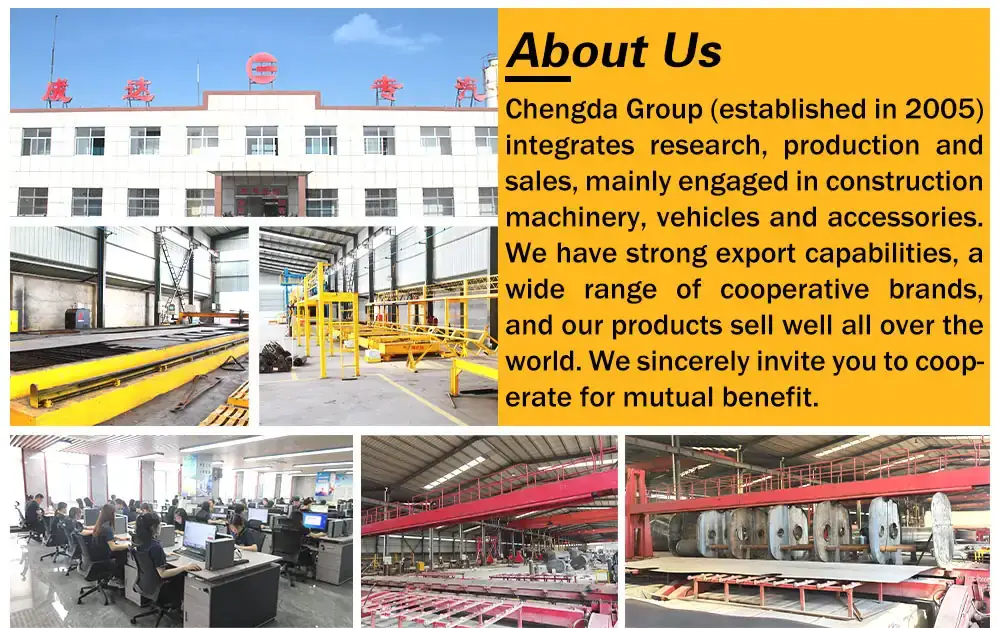
The best maintenance program is only as good as your access to technical support and spare parts when something goes wrong. Qingdao Csd Auto And Equipment Co., Ltd. a certified Chinese trailer manufacturer founded in 2005, provides every fuel semi trailer with a comprehensive maintenance manual and parts catalog. Their remote after-sales team offers online technical guidance, troubleshooting support, and spare parts coordination for fleet buyers across Africa, Latin America, and Southeast Asia. When your team has a question about a weld spec, a torque value, or a replacement part number, having factory-backed support that responds in hours rather than days keeps your fuel semi trailer on the road and off the repair bay.
Key Takeaways for Your Fuel Semi Trailer Maintenance Program
Building a disciplined maintenance program for your fuel semi trailer fleet comes down to three principles:
1. Make inspections calendar-driven, not problem-driven. A fuel semi trailer checked on schedule rarely surprises you. One checked only after something breaks always does.
2. Document everything. Every inspection, every repair, every part replaced. A complete maintenance log adds significant resale value when you eventually sell or trade your fuel semi trailer.
3. Partner with a manufacturer that supports your maintenance team — not just sells you a trailer. Having factory-backed technical support and reliable spare parts access turns maintenance from a cost center into an investment in uptime.
Final Thoughts
A fuel semi trailer is not a disposable asset. With the right maintenance program, a well-built aluminum fuel semi trailer can deliver 15 to 20 years of reliable service. The practices covered in this article are not theoretical — they are the distilled experience of fleet operators and maintenance engineers who have kept fuel semi trailers running safely and profitably across Africa, Latin America, and Southeast Asia.
Start with the 90-day weld inspection. Build the habit of flushing between product types. Check your suspension every 30 days. And when you need expert guidance or replacement parts, Shandong Chengda Auto Sales Co., Ltd. is ready to support you — with nearly two decades of fuel semi trailer manufacturing experience and a commitment to keeping your fleet on the road.